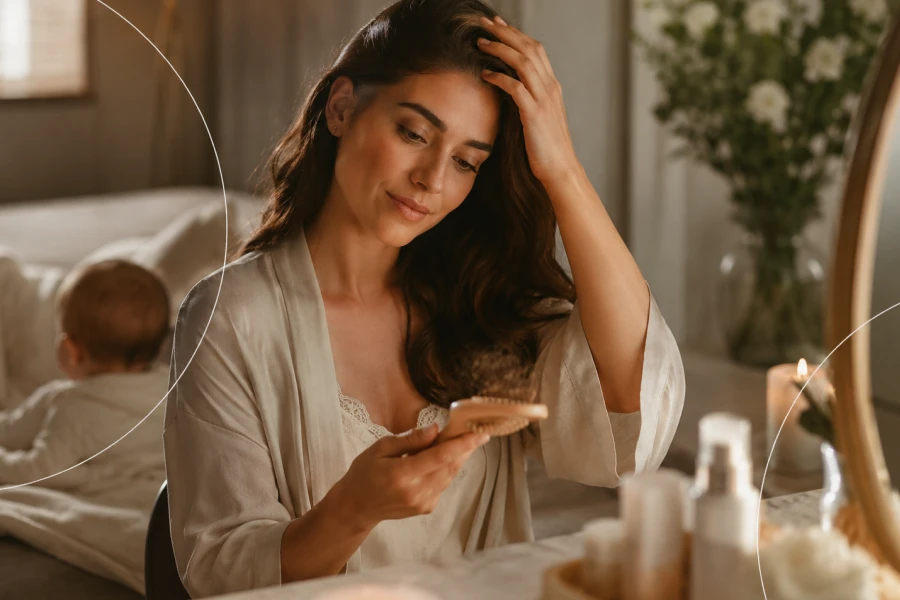
Postpartum shedding can feel alarming, especially when handfuls of hair appear after washing. The truth is that many new moms experience this shift. Still, knowing that does not always make it easier emotionally. Postpartum hair loss solutions help you respond with patience instead of panic. Your body is recalibrating after pregnancy. Hormones, stress, sleep loss, and nutrition all play roles. Hair needs time to return to a steady rhythm. Gentle care can protect what remains. Smart styling can reduce breakage. Supportive routines can restore confidence.
Postpartum hair shedding often appears a few months after delivery. It happens because pregnancy can keep more hair in the growth phase. After birth, more strands shift into shedding around the same time. That timing can feel dramatic. It does not mean you are doing everything wrong. Understanding the process reduces fear. It also helps you avoid aggressive quick fixes. The postpartum shedding support approach focuses on gentle, realistic care. Your scalp needs calm consistency. Your mindset needs reassurance too.
Daily styling can either protect fragile hair or increase stress on it. Tight buns, slick ponytails, and heavy extensions may worsen breakage. Soft styles are kinder around the hairline. Loose braids can keep hair controlled without pulling. Claw clips can reduce tension when used gently. A shorter cut may feel refreshing for some women. Others prefer layers that create movement. The new mom hair routine can help you choose practical options. Styling should save energy, not drain it. Confidence can return through small wins.
Your scalp may feel tender during the postpartum season. Sleep loss and stress can make sensitivity feel stronger. Gentle massage during washing can feel soothing. Avoid scratching or harsh brushing near thinning areas. Choose cleansers that leave the scalp comfortable. Rinse thoroughly to prevent buildup. Keep conditioner away from roots if it causes heaviness. Hydrate your lengths so detangling becomes easier. Use a soft towel after washing. Calm scalp care supports the whole routine.
Not every strand in the drain is shedding from the root. Some hair breaks because it becomes dry, tangled, or overhandled. Breakage prevention matters during postpartum recovery. Detangle from the ends upward. Use slip before combing through knots. Reduce unnecessary heat when possible. Protect hair during sleep if friction causes roughness. A pregnancy and postpartum hair plan gives you structure before frustration builds. Strong routines make fragile phases feel less chaotic. Protection helps you preserve length.
Hair recovery connects to the whole body. Meals, hydration, sleep, and stress all influence how you feel. New motherhood rarely makes perfect self-care possible. That is why realistic expectations matter. Focus on consistent nourishment when you can. Ask for support when daily life feels heavy. Avoid comparing your timeline to someone else’s. Hair cycles need time to normalize. Progress may look slow before it feels obvious. Patience is part of the process.
Postpartum hair loss solutions should protect your confidence as much as your strands. Try a new part if thinning looks obvious. Use soft volume near the crown. Choose accessories that feel pretty without pulling. Keep a few easy styles ready for rushed mornings. Remind yourself that this phase is usually temporary. Take photos monthly if progress feels invisible. Postpartum hair loss solutions work best with gentleness. Your hair is recovering alongside you. You are allowed to care deeply and stay patient.




Leave a comment